
Evolution and Special Conditions
Evolve on the right turn, and resolve the five Special Conditions in Pokémon Checkup.
8 min read
After this guide you can
- Say when a Pokémon can evolve.
- Resolve a Pokémon Checkup with Poisoned and Burned.
Worked example: Charmander becomes Charizard ex
Turn 1: Basic
Evolution line
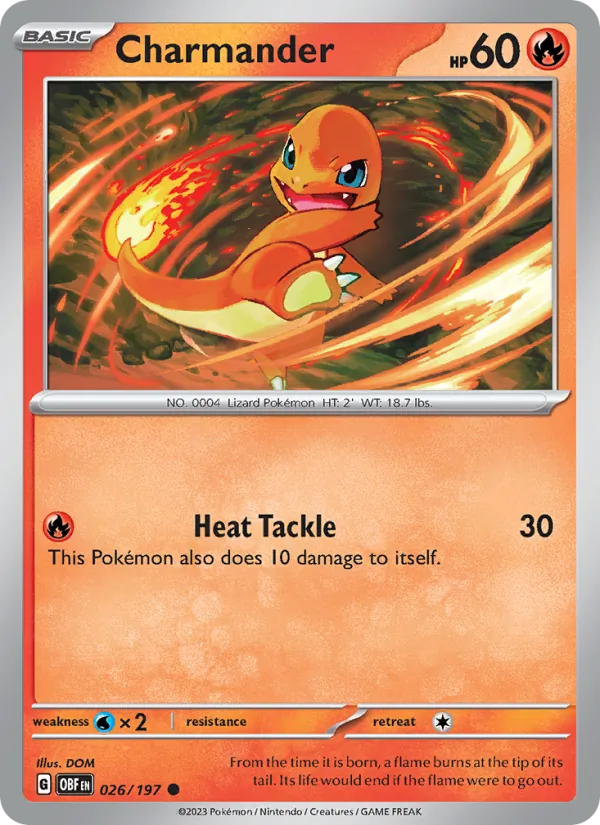
60 HP
Turn 2: Stage1
Evolution line
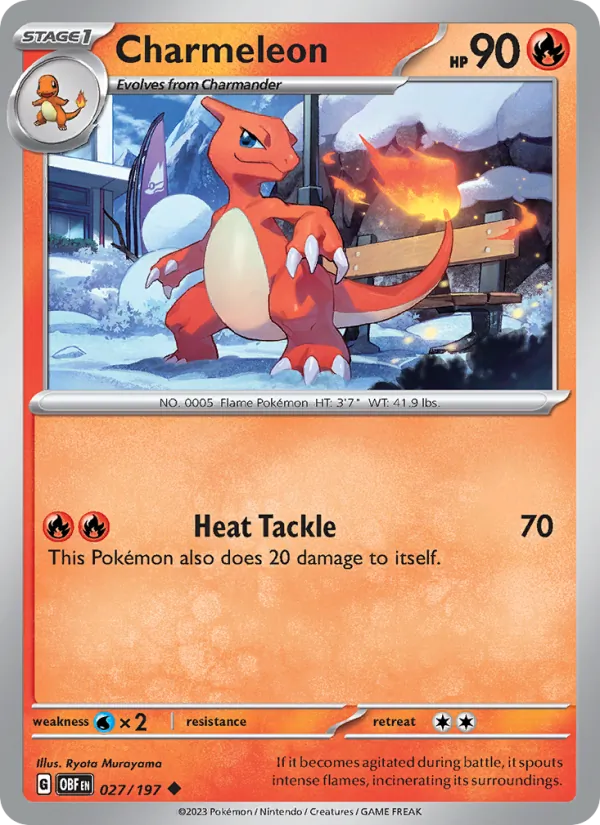
90 HP
Turn 3: Stage2
Evolution line
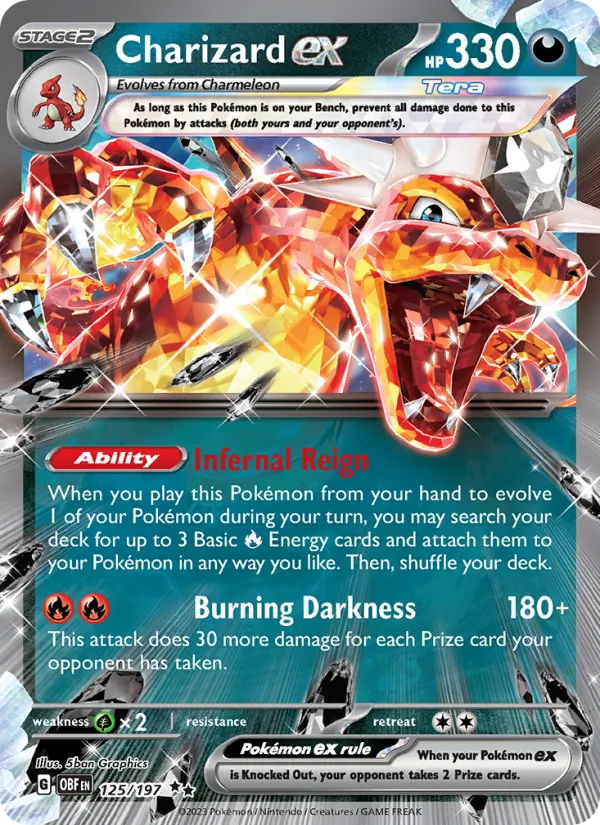
330 HP
1 / 3
Your first turn: put Charmander on your Bench. You cannot evolve on your own first turn, and Charmander is new in play.
Your next turn: Charmander was in play when the turn started, so put Charmeleon on top of it.
The turn after: put Charizard ex on top of Charmeleon. It keeps the damage counters and the Energy of Charmeleon, and it uses only its own attacks.
Charmander, Obsidian Flames, illustrated by DOM. Charmeleon, Obsidian Flames, illustrated by Ryota Murayama. Charizard ex, Obsidian Flames, illustrated by 5ban Graphics. Card images from TCGdex. Pokémon is a trademark of Nintendo, Creatures and GAME FREAK. BinderLoot is unofficial and is not endorsed by them.
A player evolves a Pokémon by putting a card whose "Evolves from" names it on top of it, if that Pokémon was in play since the start of the turn. No player evolves on their own first turn, and a Pokémon evolves once a turn at most.
Rulebook: Turn Actions, p. 11
Only a Basic Pokémon goes into play from the hand. A Stage 1 goes on top of its Basic, and a Stage 2 on top of its Stage 1.
Rulebook: Setting Up to Play, p. 8; Turn Actions, p. 11
An evolved Pokémon keeps its attached cards and damage counters, loses its Special Conditions and the effects of attacks, and uses only the attacks of the new card.
Rulebook: Turn Actions, p. 11
The five Special Conditions
Only an Active Pokémon can have a Special Condition. Asleep, Confused and Paralyzed turn the card. Burned and Poisoned use a marker.
An Asleep Pokémon cannot attack or retreat. At each Pokémon Checkup, flip a coin: heads, it wakes up.
Rulebook: Special Conditions, p. 15
At each Pokémon Checkup, put 2 damage counters on a Burned Pokémon, then flip a coin: heads, it recovers.
Rulebook: Special Conditions, p. 15
Before a Confused Pokémon attacks, flip a coin: tails, the attack does not happen, and the Pokémon gets 3 damage counters.
Rulebook: Special Conditions, p. 16
A Paralyzed Pokémon cannot attack or retreat. It recovers at the Pokémon Checkup after its owner's next turn.
Rulebook: Special Conditions, p. 16
At each Pokémon Checkup, put 1 damage counter on a Poisoned Pokémon. A second Poisoned replaces the first.
Rulebook: Special Conditions, p. 16
Worked example: a Pokémon Checkup
- CharmeleonPokemon — Stage1
Charmeleon, Obsidian Flames, illustrated by Ryota Murayama. Card images from TCGdex. Pokémon is a trademark of Nintendo, Creatures and GAME FREAK. BinderLoot is unofficial and is not endorsed by them.
- 1Charmeleon has 90 HP and 30 damage. It is Poisoned and Burned. The turn ends, and Pokémon Checkup begins.
- 2Poisoned comes first: put 1 damage counter on it. It now has 40 damage.
- 3Burned comes next: put 2 damage counters on it, so it has 60 damage. Then flip a coin. Heads, it recovers from Burned.
- 4Then check Knock Outs: 60 damage is less than 90 HP, so Charmeleon stays in play, still Poisoned.
Between turns, Pokémon Checkup applies Special Conditions in this order: Poisoned, Burned, Asleep, Paralyzed. Then Knock Outs are checked.
Rulebook: Special Conditions, p. 15
Your turn: run a Pokémon Checkup
- CharmanderPokemon — Basic
Charmander, Obsidian Flames, illustrated by DOM. Card images from TCGdex. Pokémon is a trademark of Nintendo, Creatures and GAME FREAK. BinderLoot is unofficial and is not endorsed by them.
Charmander has 60 HP and 20 damage. It is Poisoned and Asleep.