
How a turn runs
Five phases, always in the same order. Each card type has its own phases.
6 min read
After this guide you can
- Put the five phases of a turn in order.
- Say in which phases you can cast a creature, a sorcery and an instant.
The five phases
Every turn runs the same five phases in the same order. The two main phases sit on either side of combat, and you cast most of your cards in them.
A turn has five phases in this order: beginning, first main, combat, second main, and ending.
CR 500.1
The beginning phase is the untap step, then the upkeep step, then the draw step. No player gets priority in the untap step.
CR 501.1, 502.3, 503.1, 504.1, 117.3a
Worked example: a turn with an Island and A.I.M. Scientists
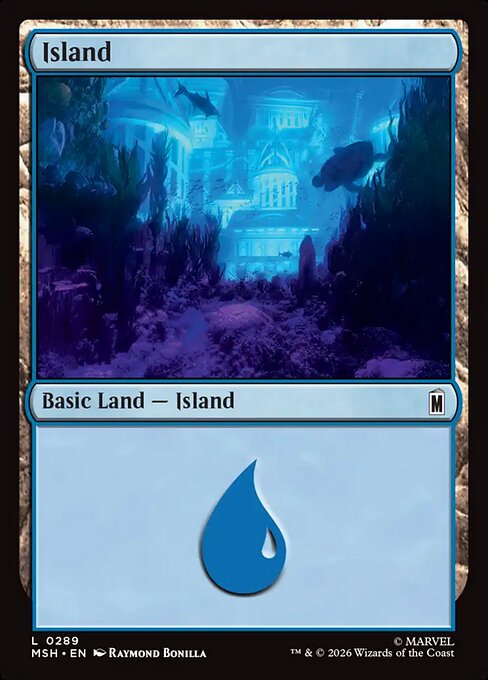
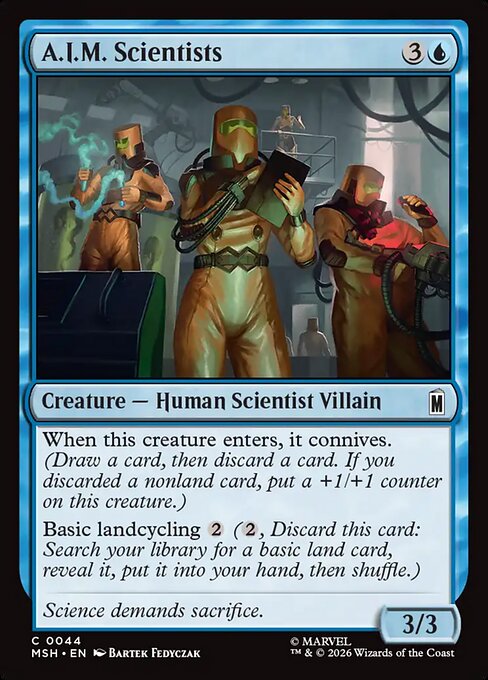
You play one land, then cast what your mana pays for.
A creature you cast this turn cannot attack this turn. It can still block in the next turn of your opponent.
The same rules as the first main phase, after you know what combat cost you.
1 / 5
Beginning phase: you untap your lands and creatures, effects that say "at the beginning of your upkeep" happen, and you draw a card.
First main phase: you play an Island, then tap it with three other lands to cast A.I.M. Scientists.
Combat phase: you can attack with the creatures you controlled when the turn started. The next guide teaches combat.
Second main phase: the same rules as the first. If you kept your land, you can play it now.
Ending phase: effects that say "at the beginning of your end step" happen. Then you discard down to seven cards, and damage on every creature is removed.
Island, Marvel Super Heroes, illustrated by Raymond Bonilla. A.I.M. Scientists, Marvel Super Heroes, illustrated by Bartek Fedyczak. Card images from Scryfall. Magic: The Gathering is a trademark of Wizards of the Coast. Marvel and all related character names are trademarks of MARVEL. BinderLoot is unofficial Fan Content and is not approved or endorsed by Wizards or by Marvel.
A sorcery, a creature and every other permanent spell can be cast only in your own main phase, while the stack is empty.
CR 307.1, 302.1, 117.1a
At the cleanup step of their own turn, a player with more than seven cards in hand discards down to seven. The discard is not optional, and it happens only then.
CR 514.1, 402.2
Damage marked on a creature is removed in the cleanup step at the end of each turn.
CR 514.2
What you can cast in each phase
- A.I.M. ScientistsCreature — Human Scientist Villain · 3/3
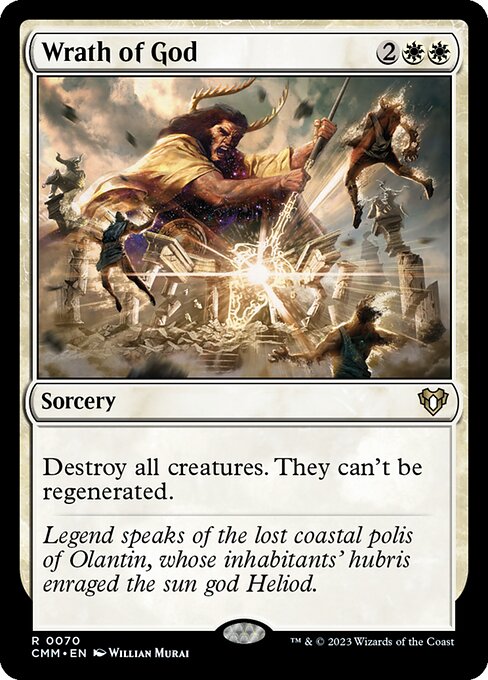 Wrath of GodSorcery
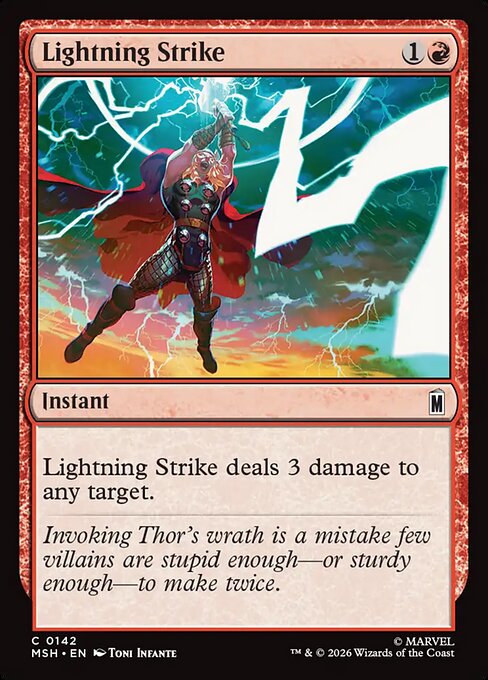 Lightning StrikeInstant
A.I.M. Scientists, Marvel Super Heroes, illustrated by Bartek Fedyczak. Wrath of God, Commander Masters, illustrated by Willian Murai. Lightning Strike, Marvel Super Heroes, illustrated by Toni Infante. Card images from Scryfall. Magic: The Gathering is a trademark of Wizards of the Coast. Marvel and all related character names are trademarks of MARVEL. BinderLoot is unofficial Fan Content and is not approved or endorsed by Wizards or by Marvel.
- A creature or a sorcery: only in your own first or second main phase, when no other spell is waiting.
- An instant: in any phase where you could act, in your turn and in the turn of your opponent.
An instant can be cast at any time you have priority, including in the opponent's turn and in combat.
CR 304.1, 117.1a
Your turn: finish the turn
- Wrath of GodSorcery
Wrath of God, Commander Masters, illustrated by Willian Murai. Card images from Scryfall. Magic: The Gathering is a trademark of Wizards of the Coast. BinderLoot is unofficial Fan Content and is not approved or endorsed by Wizards or by Marvel.
It is your turn. You untapped and drew a card. You hold Wrath of God and eight other cards.